
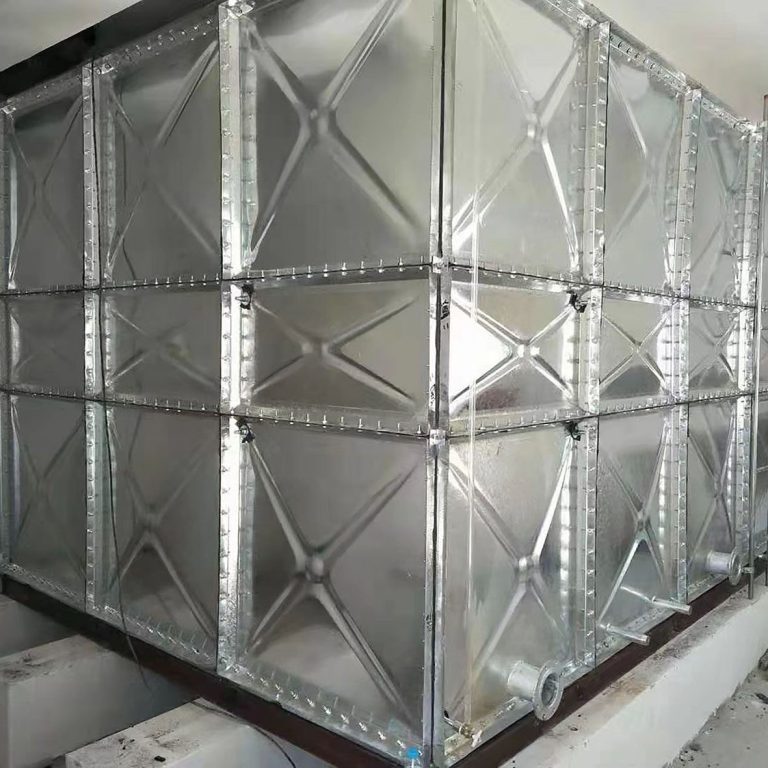
Bolted Stainless Steel Sectional Water Tank (SS304 / SS316)
Bolted stainless steel sectional water tank (SS304/316), also called modular or panel tank: flat-packed panels for potable, fire and process storage.
SS304 / SS316 stainless steelFactory-direct export · Guangzhou office · Xianning manufacturing base
LONGCOM manufactures bolted stainless steel sectional tanks (SS304 / SS316), welded stainless steel panel tanks (304 / 316), supporting HDG, GRP/FRP and BDF systems, closed aseptic tanks for purified and direct-drinking water, and pressure media and bag filters for pretreatment and polishing. Tanks and vessels are factory-built, packed for container shipment, and supplied with the drawings, test records and documentation pack your project team needs to approve, install and hand over.
LONGCOM is a China-based manufacturer of modular water tanks for export projects. The core product is a bolted stainless steel sectional tank: factory-punched SS304 or SS316 panels, non-toxic sealing strips, bolts and tie rods, assembled on site without welding or hot work. The second core product is a welded stainless steel panel tank for projects that require a seamless vessel, a fixed installation or a shape that cannot be formed from standard bolted panels.
We also supply hot-dip galvanized (HDG) bolted tanks, bolted GRP/FRP (SMC panel) tanks and BDF duplex-coated panel tanks as supporting options. The right system depends on the water chemistry, the required service life, the site conditions and the installed cost — not on a generic “best tank” claim. We will state the trade-offs in writing before you commit.
Every quotation is built around the same five inputs: capacity or dimensions, application, material, site conditions and destination. That is why we do not publish a single price per cubic metre. A 500 m³ fire reserve in a coastal industrial zone and a 500 m³ potable tank on a roof in Central Asia may use different panel thicknesses, different stainless grades, different tie-rod layouts and different packing.
Start with the application and the site, then confirm the material. The table below is a shortlisting guide; the final specification is confirmed against your drawing and water report.
| Application | First choice | Why it fits | Confirm before quotation |
|---|---|---|---|
| Potable water storage | Bolted stainless sectional (SS304 / SS316); welded stainless | Food-grade contact surface, no internal coating, cleanable joints and fittings. | Water analysis, chlorine residual, required potable-contact standard, inspection access. |
| Fire water reserve | Bolted stainless, HDG or GRP/FRP sectional | Large capacity, fast site assembly, panel packing that suits container export. | NFPA 22 / EN 12845 / local fire code, tank capacity, refill rate, outlet arrangement. |
| Industrial process water | SS316 bolted or welded; GRP/FRP/BDF where composite or coated panels are acceptable | Grade and finish can be matched to chloride, acidity and process contamination risk. | Water chemistry, temperature, discharge requirements, cleanability, structural loads. |
| Irrigation storage | HDG, GRP/FRP or BDF bolted sectional | Lower installed cost per cubic metre for large volumes; fast assembly on remote sites. | Water source, silt/abrasion, wind load, access road, seasonal fill/draw cycle. |
| HVAC make-up / closed loop | Bolted stainless or welded stainless | Compact footprints and clean internal surfaces; optional insulation and connections. | Design pressure, temperature, make-up water quality, plant-room access. |
| Wastewater / effluent | GRP/FRP or BDF sectional | Composite or coated panels can separate the stored water from the structural substrate. | Chemical composition, pH, abrasion, odour control, cover and venting requirements. |
Each product page explains the construction, specification limits, selection inputs, export packing, installation sequence and documentation pack. Use the pages as a technical shortlist, then send your project data for a written confirmation.
Bolted stainless steel sectional water tank (SS304/316), also called modular or panel tank: flat-packed panels for potable, fire and process storage.
SS304 / SS316 stainless steel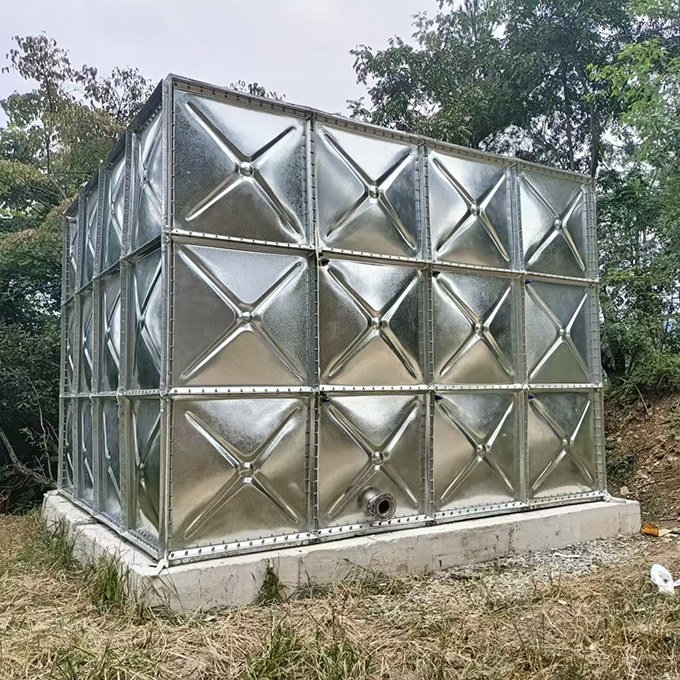
Hot-dip galvanized steel bolted sectional water tank (HDG / galvanised panel tank) for fire, irrigation and industrial water: flat-packed for export.
Hot-dip galvanized mild steel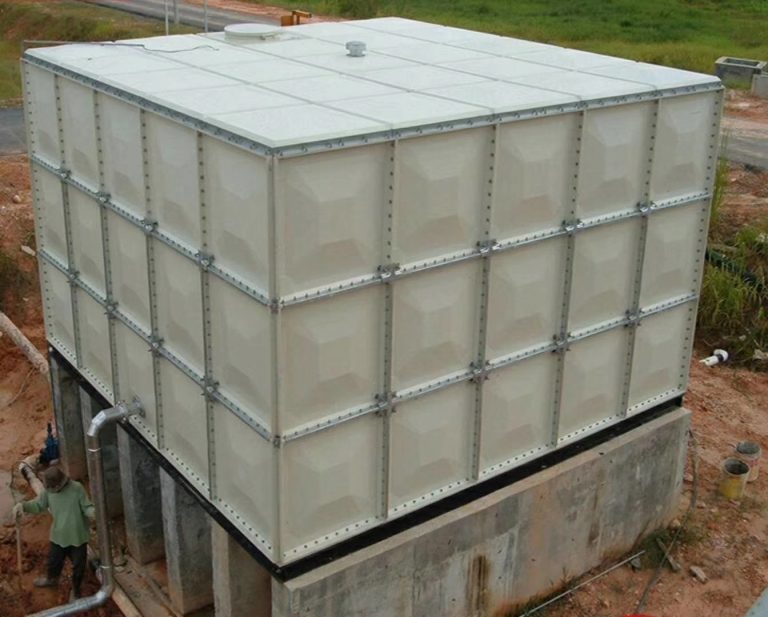
Bolted GRP/FRP sectional water tank made from factory-molded SMC panels for potable, fire, wastewater and industrial water storage.
Glass-fiber reinforced plastic (GRP/FRP), SMC molded panel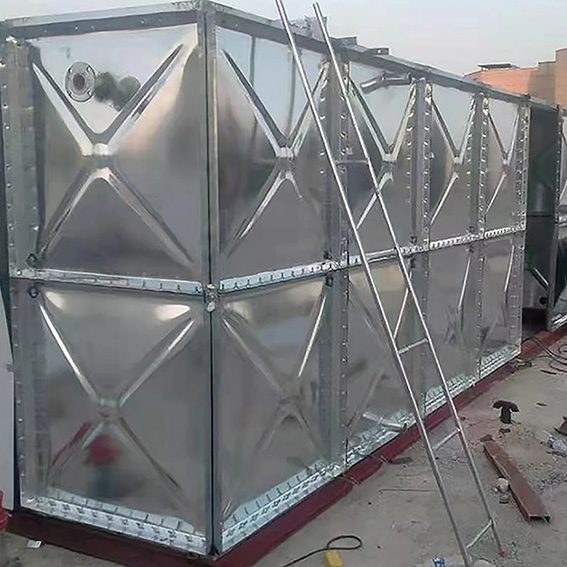
Duplex-coated galvanized steel panel water tank (BDF) for potable, fire and rural water: modular, flat-packed and available with a project-approved coating.
Hot-dip galvanized steel with bonded protective coating (duplex)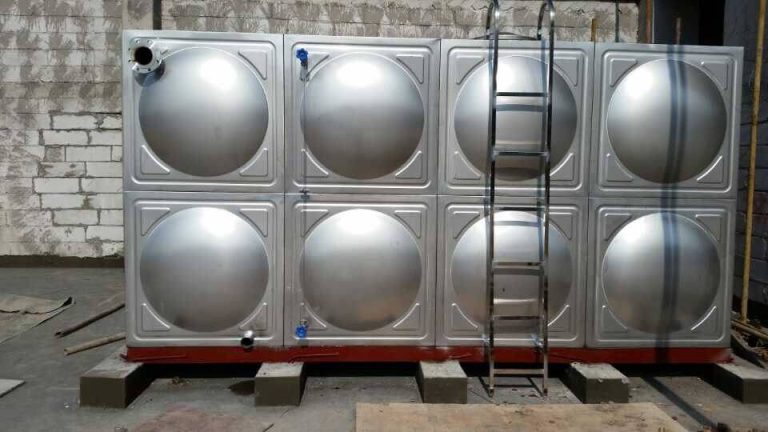
Welded stainless steel water tank (SS304/316L) for potable, food, pharmaceutical and process duty, with factory or site welding and export documentation.
SS304 / SS316 / SS316L stainless steel, welded construction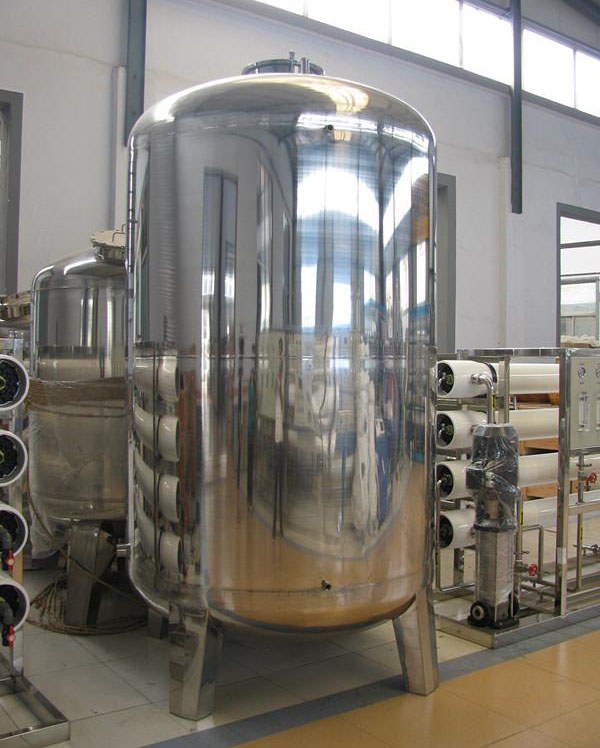
Aseptic stainless steel water tank (sterile/pharmaceutical purified water tank) in SS316L with 0.22 micron vent, CIP/SIP and nitrogen option.
SS304 / SS316L hygienic stainless steel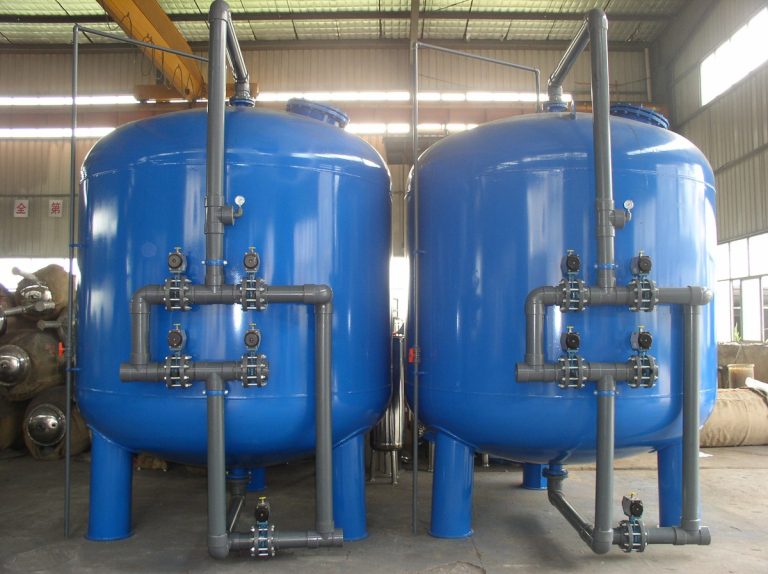
Mechanical media water filter, also called pressure sand filter or multimedia filter: steel, stainless or FRP vessels for turbidity and RO/UF pretreatment.
Epoxy-coated carbon steel; SS304/316; FRP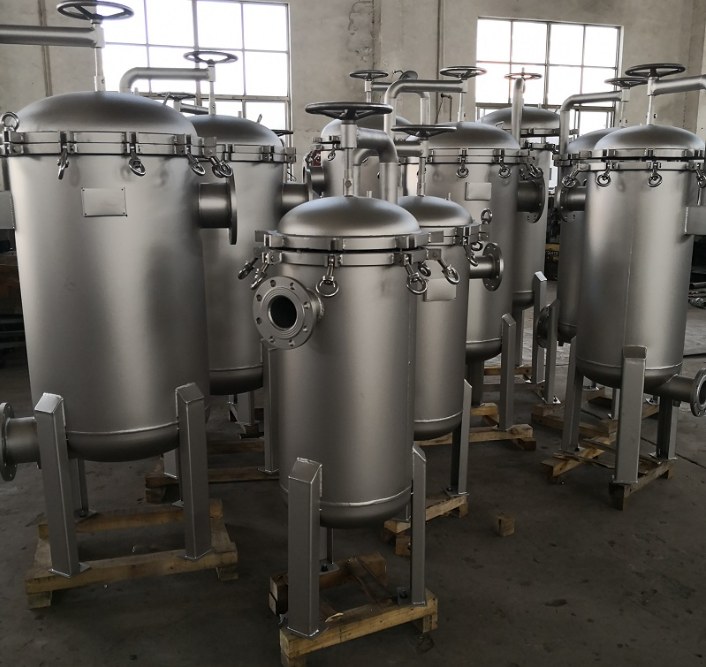
Liquid bag filter housing for water treatment: single and multi-bag units in carbon steel, SS304/316L or PP for RO guard and process…
Carbon steel, SS304/316L, PP; NBR/EPDM/FKM/silicone sealsA tank is not an “off-the-shelf” item once it crosses a border. The export scope has six stages, and each stage produces a document or decision the buyer can check.
We check capacity, application, material, site loads and destination port; missing data is listed in one clarification message.
General arrangement drawing, panel schedule, connection positions and base interface are issued for approval before production.
Panel punching, dimensional checks, material verification, packing check and water-fill test are recorded against the approved drawing.
Panels are numbered to the erection sequence, packed in steel-framed crates, and loaded against a container plan.
Packing list, commercial invoice, bill of lading, certificate of origin and project-specific certificates are checked before dispatch.
Installation manual, video guidance and optional supervision; commissioning checklist and test records close the handover.
For an EPC tender or a consultant’s submittal, the specification alone is not enough. The document pack must let the reviewer check dimensions, materials, tests and scope without requesting a second round of information.
| Document | What it proves | When it is issued |
|---|---|---|
| General arrangement drawing | Plan dimensions, elevation, connections, access openings and base interface. | For approval before production |
| Panel schedule & erection sequence | Panel size, quantity, marking and assembly order; supports site planning. | With the approved drawing |
| Material certificates | Grade and heat/batch traceability for the panels and major fittings. | With shipment documents |
| Inspection & test records | Dimensional checks, weld/bolt checks, water-fill test and any agreed third-party inspection. | Before packing / handover |
| Packing list & loading plan | Package count, weights, panel marks and container sequence. | Before dispatch |
| Installation manual & O&M | Base preparation, erection steps, torque values, pipe connections, cleaning and maintenance. | With shipment |
| Warranty document | Scope, term and exclusions confirmed in the contract. | With handover |
We publish only documents that are actually issued for the project. We do not use a certificate number, standard logo or “certified” claim that is not backed by a document you can verify.
The inspection plan is agreed at order stage. For a standard bolted stainless tank, the usual gates are:
| Gate | Check | Record |
|---|---|---|
| Incoming material | Steel grade, sheet thickness, surface condition and certificate traceability. | Material certificate and receiving check |
| Panel fabrication | Panel dimensions, punch pattern, hole positions, edge condition and corner radii. | Dimensional inspection sheet |
| Assembly trial | Sample panels assembled to confirm bolt fit, seal-strip fit and joint alignment. | Trial-assembly record (where specified) |
| Water-fill test | Full-fill test of the assembled tank or agreed test section; joint leakage check. | Test record with date and result |
| Packing | Panel count, marks, crate condition, fasteners and accessory list against the packing list. | Packing inspection and loading photos |
| Third-party inspection | Client or nominated inspector witness points, if required by the purchase order. | Signed inspection release |
Fire water reserve · Dongguan, China
A fire water tank for the logistics park, completed in June 2015. The installation used a 12 m × 12 m × 6 m tank — 864 m³ nominal geometric volume — and was delivered as a factory-built panel system for site assembly.
The project is a reference for large-footprint fire reserve tanks where panel logistics, base preparation and a fixed completion date matter as much as the tank itself.
Regional pages explain the typical project conditions, port routes, documentation expectations and material preferences buyers ask about most often. They are starting points for a quotation, not a claim that every local standard is automatically met.
Two quotations can show the same capacity and the same grade on the cover sheet and still deliver different tanks. Compare the items below line by line before you treat the lowest price as the lowest cost.
| Item | What a complete quotation states | Why it changes the delivered cost |
|---|---|---|
| Panel thickness | Thickness by ring or panel zone, not one number for the whole tank. | Thinner panels may need closer supports, more tie rods or a smaller maximum height. |
| Steel certificate | Grade, heat/batch number and mill certificate for the panels. | Substitution or missing traceability can fail a tender review or a potable-water audit. |
| Seal and fastener scope | Seal-strip material, bolt grade, washers and spare allowance. | A short allowance or a lower-grade fastener can stop installation or shorten service life. |
| Packing and marks | Crate type, panel numbering, loading plan and container count. | Poor packing or loading sequence creates site delays that are not visible in the tank price. |
| Inspection and test | Hold points, water-fill test, third-party witness and records. | Unwitnessed tests may have to be repeated at site, at the buyer’s cost. |
| Documentation | Drawing, panel schedule, test records, O&M and warranty. | Missing documents can hold customs clearance, handover or final payment. |
Ask for the quotation with the same scope you will put in the purchase order. A price without the packing, inspection and document scope is not a like-for-like comparison.
These three guides go deeper into form, installation and operating problems for the newer product families. They are written for project teams that have already fixed the duty and need to review the practical details before quoting or site work.
For the hub page, the questions are grouped by the decision a buyer is making: selection, water quality, site work, export documents and commercial terms. Each answer links to a deeper page where one exists.
Guangzhou Longcom Equipments Co., Ltd. is a manufacturer and exporter, with production in Guangzhou and a second base in Xianning, Hubei. Factory visits and third-party inspection are welcome by appointment. Ask for the business license name, factory address and a recent project reference, and check that the bank account name matches the contracting entity.
Start with the water chemistry and the required approval. Bolted stainless (304 or 316) is the usual choice for modular storage; GRP/FRP SMC panels can be used where a potable-grade resin and liner are documented; welded stainless is used where a closed, cleanable vessel is required. NSF/ANSI 61, WRAS or a local approval is claimed only when a valid document covers the proposed product and factory. See the potable water material selection guide.
Bolted tanks are factory-punched and assembled on site without hot work. They suit export, remote sites, tight access and projects that may expand later. Welded tanks give a continuous shell and are preferred for hygienic duty, high heads, irregular shapes and sites with a reliable welding team. Compare installed cost, schedule, maintenance and future modification, not only the panel price.
HDG steel, BDF, bolted stainless and GRP/FRP can all be used, but the fire code, required flow and duration, refill rate, outlet arrangement and base details decide the system. Stainless or a protected coating is preferred where the water or soil is corrosive. The coating system, cut-edge protection and inlet/outlet layout must be confirmed against the fire code and insurer requirements.
Start with daily demand, fire flow and duration, HVAC make-up, process batch size or irrigation cycle, then add dead volume, sediment allowance and future expansion. Distinguish nominal geometric volume from usable volume. For fire storage, the required volume is set by the code and the refill calculation, not by a round number. Send the duty and we will check the usable volume against the drawing.
Insulation and cladding are available for cold, hot or humid conditions. The vapor barrier, fixings, penetration details and thermal movement must be designed together. Buried or partially buried tanks need a project-specific structural design, uplift check, access and corrosion protection; they are not a standard catalogue item. Send the soil, water level and traffic load before quoting.
Capacity or dimensions, application, water analysis, material preference, site location, wind and seismic data, base type, connection schedule, access route, lifting equipment and the required documents. The general arrangement, panel layout and base load are issued for approval before manufacturing. A drawing without those inputs is only a sketch.
304 is normally adequate for low-chloride, neutral water. 316 or 316L is used where chloride, sulfide or cleaning chemicals raise the pitting risk. Grade selection should follow the actual water analysis, temperature and crevice conditions, not the product name alone. Specify passivation and pickling for welds, and confirm the fastener grade.
GRP/FRP is suitable only when the SMC panel, resin and liner are documented for potable contact and the required local approval is valid. Not every FRP panel is a potable-water product. Ask for the panel data sheet, resin type, liner, test report and certificate scope; do not accept a generic “food grade” statement.
Send pH, chloride, sulfate, TDS, hardness, alkalinity, iron, manganese, turbidity, temperature, sulfide and any cleaning or dosing chemicals. For fire water, add the required flow, duration and refill source. For process water, add pressure, temperature and CIP chemicals. The analysis is the design basis, not a nice-to-have.
Coating life depends on surface preparation, coating mass, cut-edge protection, UV exposure and repair practice. A factory-applied HDG or duplex coating is not equal to a site-painted patch. Ask for the coating system, dry-film thickness, adhesion test and repair procedure, and include a repair kit in the spare parts.
Seawater and high-chloride sites need a project-specific review. 316L may be considered where the temperature and crevice conditions allow; GRP/FRP or a protected steel system may be a better fit for some duties. Fasteners, welds, internal liners and cathodic protection all matter. We will state whether the duty is inside our standard range or needs a different design.
The base must be flat, level, load-bearing and drained. Concrete or steel supports are designed for the tank mass, water mass, wind, snow and seismic loads. Anchorage, access to fittings and clearance for panel assembly must be shown on the base drawing. Do not set a panel tank on unsupported ground or a slab that cannot take the concentrated loads.
Yes, if the panel or section size can pass the door, lift and corridor, and the roof or floor can take the load. Check the plant-room height, crane or hoist access, ventilation and corrosion from condensate. A tank that is correct on the drawing but cannot enter the building is not a solution; confirm the access route before order.
It depends on tank size, crew, access, weather and whether the tank is bolted or welded. A bolted tank is usually faster because panels are factory-punched and no hot work is needed; a welded tank needs more site welding, inspection and passivation. The schedule is confirmed after the drawing and site survey.
Yes. Supervision or a full installation crew can be quoted by country and duration. The buyer normally provides site access, power, water, lifting equipment, permits and safety induction. The scope split, daily rate and handover checklist should be written into the quotation so there is no gap at site.
Bolted tanks are flat-packed on pallets and loaded into containers; welded tanks ship complete or in sections depending on size and route. The packing plan covers panel weight, crate marks, lashing, moisture protection and a container loading sequence. See the export logistics guides for container loading and packing checks.
The standard pack includes the commercial invoice, packing list, bill of lading, certificate of origin where applicable, material certificates, dimensional and test records, and the warranty document. Project submittals can add the general arrangement, product data, installation method and inspection plan. Name the tender clause and the destination country at inquiry stage.
Only document-verified items are claimed. Certificate numbers, scope, factory and validity are provided for tender review when a valid document covers the proposed product. No certificate logo or number is displayed until it has been verified. If a tender requires NSF/ANSI 61, WRAS, FM, UL or another listing, send the exact requirement and country of installation.
Send the technical clauses and we will confirm compliance point by point in writing. Where a clause cannot be met, we flag the deviation before award rather than substituting silently. The response should identify the standard, test method, material grade, documentation and any proposed alternative, so the evaluation is like-for-like.
Lead time is confirmed after drawing approval and material confirmation. It covers engineering, panel production, coating or welding, inspection, packing and booking. Seasonality, port congestion and site access can change the delivery date. We quote a written schedule with named stages rather than a single optimistic number.
Warranty terms are stated in the order contract and the warranty document is issued with the order confirmation. Normal wear items such as seals, and damage from incorrect installation, unauthorized modification or aggressive water without the agreed material, are normally excluded. Read the scope before comparing suppliers.
Check four things: the business license name, the bank account name, the factory address and a recent project reference. They should match the contracting entity. Ask for a video or third-party factory inspection, the panel data sheet and the certificate scope. A trading company can be legitimate, but it must disclose the manufacturer and the responsibility split.
Keep a spare seal set, fasteners, one or two panels of each type, a coating repair kit and the installation manual. Seals are a wear item; a missing seal box can stop a site more effectively than a delayed panel. For remote sites, add one extra access hatch gasket and the special tools named in the manual.
Send capacity or dimensions, application, material preference, water analysis, destination port or site address, required documents and whether installation supervision is needed. With those inputs we can normally respond within 12 working hours. If the data is incomplete, use the RFQ checklist to separate known facts from items to confirm.
Capacities, panel sizes, material grades and lead times are confirmed in writing for each project before quoting. Certifications and project references are stated only where a valid document or confirmed reference exists.
Send capacity or dimensions, application, material preference, site country, destination port and any tender standard. We will reply within 12 working hours with the missing information list, a budgetary quotation and the next step for drawing approval.
Send your capacity, flow, water quality, material and site requirements — quotation response within 12 working hours.
Request a Quotation